Earth. They protect coastal communities from storm damage, remove nutrients and pollutants from runoff, and store high levels of carbon below ground.
Despite the critical role they play, marshes have been subjected to various human impacts, including but not limited to land development, sea-level rise, hydrological modifications that have degraded or destroyed these areas over many decades.
With the threats facing salt marshes, the Maritime Aquarium and partners are studying the genetic diversity of both natural and restored marshes across Connecticut. By measuring and analyzing different factors affecting salt marshes, we hope to better understand the structure, function, and resilience of these intricate ecosystems.
The Aquarium’s current research focuses on the impacts of warming and planting strategy on the resilience of restored salt marshes, with the ultimate goal of improving restoration techniques. Such techniques will be critical in protecting salt marshes from the consequences of climate change and sea-level rise. Our partners in this work include Northeastern University, Sacred Heart University, and Harbor Watch. Funding for these projects has been provided by Connecticut Sea Grant and the Long Island Sound Research Grant Program.
The Maritime Aquarium and partners are working towards restoring Long Island Sound’s habitats for the benefit of both people and the environment. Through the Long Island Sound Futures Fund, we are working with the City of Norwalk and the Norwalk River Watershed Association to assess restoration options for Veteran’s Memorial Park, located in Norwalk Harbor.
The park is a much-needed green space in the heart of South Norwalk. Once a landfill, the area was developed into one of many large tidal wetlands that supported the harbor’s health and biodiversity for many years. Today, it faces erosion and storm damage due to sea-level rise.
The Aquarium is advocating for the implementation of habitat-building restoration techniques in order to redesign the location and transform it into a vibrant and resilient public space for all. The restoration process is projected to improve public access so that it is not regularly disrupted by flooding, maintain the historical significance of the park, and re-establish some of the habitat originally lost through a living shoreline that includes salt marsh vegetation and upland coastal plants.

Horseshoe crabs have been exploited for fertilizer, whelk bait, and biomedical applications. While the fertilizer market has dropped off, there are still threats to this important species, whose eggs are eaten by migratory birds to fuel their long flights. Populations of the horseshoe crab species in Long Island Sound, Limulus polyphemus, are of great concern.
In response, The Maritime Aquarium is conducting a comprehensive landscape analysis in order to assess the population dynamics, research and conservation topics, and threats surrounding horseshoe crabs. Additionally, the Aquarium has conducted research into the animal’s physiology to support better animal-husbandry practices and breeding.
A signature program for The Maritime Aquarium is the horseshoe crab tagging and tracking program, run through partners at Sacred Heart University and the U.S. Fish and Wildlife Service. Visit ourâ¯Community Scienceâ¯page to see how you can become involved with our annual spring program.
Located just 100 miles southeast of the Statue of Liberty, the Hudson Canyon is the largest submarine canyon off the Atlantic Coast of the United States, and one of the largest in the world. It rivals the size and scale of the Grand Canyon, and is an ecological hotspot for a vast array of marine wildlife including corals, sharks and other fishes, whales and sea birds. The designation of the canyon as a national marine sanctuary would give these important waters the benefit of federal protection, as well as the benefit of federal funding for research and management.
On June 8, 2022, the National Oceanic and Atmospheric Administration (NOAA) initiated the process to designate Hudson Canyon as a National Marine Sanctuary.
The nomination of Hudson Canyon is the culmination of years of advocacy and community-led efforts by The Maritime Aquarium, the Wildlife Conservation Society, and other conservationists, businesses and community organizations.
The Maritime Aquarium provides accurate data for water quality in Long Island Sound through several collaborations. Since 2017, we have conducted bimonthly sampling in Norwalk Harbor through participation in the Unified Water Study with Save the Sound and the Long Island Sound Study (LISS). The Aquarium and other participants measure nutrients, oxygen, temperature, salinity and chlorophyll levels in various harbors of the Sound.
The Aquarium is also working to create a pathogen monitoring network with the LISS and our partners – including the Interstate Environmental Commission, Harbor Watch, and state agencies) – to assess fecal indicator bacteria and prevent sewage pollution in the Long Island Sound watershed. This is all part of important continued monitoring and synthesis of Long Island Sound water-quality data collected by the Aquarium and partners, to be able to report changes and recommend best practices.
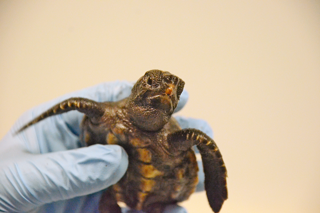 The Maritime Aquarium works to raise local awareness about these beloved seasonal visitors to Long Island Sound. Also, by supporting conservation in the Atlantic Ocean through our previous Loggerhead Loan partnership with the North Carolina Aquariums, and through sea turtle nursery work in the Caribbean, The Maritime Aquarium is driving forward partnerships that will be critical to public education, outreach and rescue to help save these endangered and threatened species. Field work supports rescues and hatchling survival in the Caribbean Basin, and the Aquarium is a leader of the AZA SAFE (Saving Animals From Extinction) Sea Turtles initiative.